
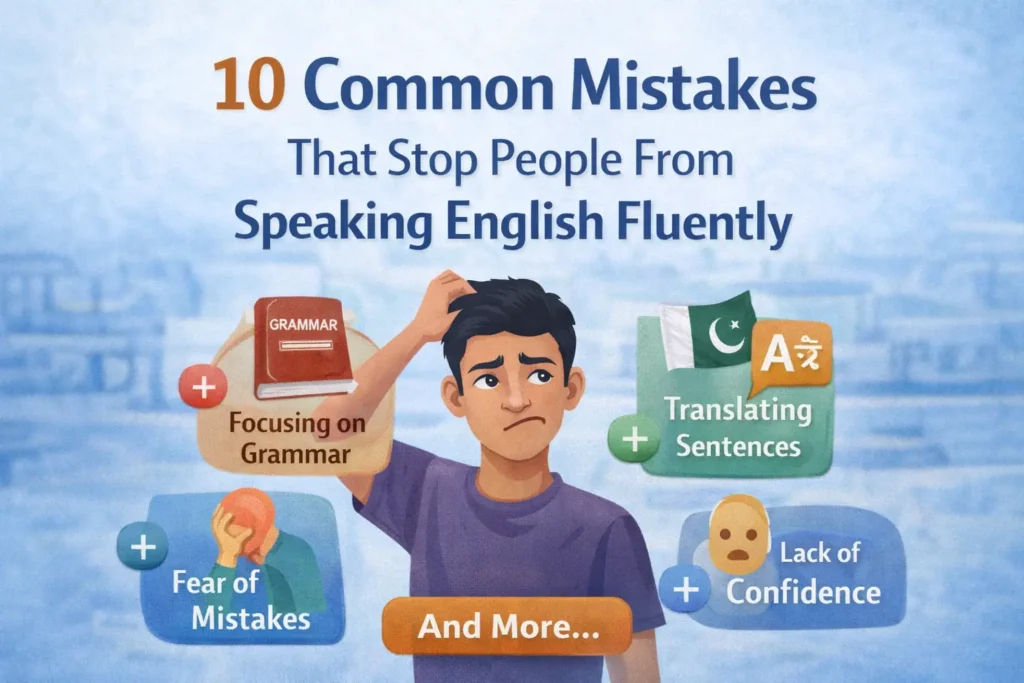
Many people spend years learning English but still hesitate when it comes to speaking. They may understand English movies, read articles, and even know grammar rules, yet they struggle to express themselves confidently.
The truth is that speaking English fluently is not only about vocabulary or grammar. It is about practice, confidence, and the right learning approach.
In this guide, we will explore 10 common mistakes that stop people from speaking English fluently and how to overcome them.
1. Focusing Too Much on Grammar
One of the biggest mistakes learners make is trying to speak perfect grammar before speaking at all.
Fluent speakers focus more on communication than perfection.
For example:
Instead of thinking for 10 seconds to form a perfect sentence, it is better to speak naturally and correct mistakes gradually.
Improvement comes through practice and correction, not silence.
2. Fear of Making Mistakes
Many learners hesitate because they fear making mistakes or being judged.
However, mistakes are a natural part of learning any language.
Even advanced English speakers occasionally make mistakes. The key is to keep speaking and improve with feedback.
Confidence grows when you practice regularly without fear.
3. Lack of Speaking Practice
Many people learn English passively by:
Watching videos
Reading articles
Studying grammar
But speaking is a skill, and skills improve only through practice.
Without regular conversation practice, fluency cannot develop.
4. Translating From Native Language
Another common problem is translating sentences from the native language into English before speaking.
This slows down communication and creates hesitation.
Fluent speakers learn to think directly in English, which makes conversations smoother and faster.
5. Limited Vocabulary Usage
Some learners know many English words but rarely use them in conversation.
Vocabulary becomes useful only when it is actively used in speaking.
Practicing new words in real conversations helps reinforce learning.
6. Not Practicing Pronunciation
Pronunciation plays an important role in spoken English.
Many learners focus only on grammar and ignore pronunciation practice.
Clear pronunciation improves both confidence and understanding during conversations.
Listening to native speakers and repeating sentences can help improve pronunciation.
7. Learning Without Feedback
When learners practice alone, they may repeat the same mistakes without realizing it.
Feedback helps identify issues in:
Pronunciation
Sentence structure
Fluency
Personalized correction helps learners improve faster.
8. Speaking Too Fast or Too Slowly
Some learners speak too fast due to nervousness, while others speak very slowly while thinking about each word.
Fluent English requires a balanced speaking pace.
Practicing conversations regularly helps develop natural rhythm.
9. Lack of Confidence
Confidence is one of the biggest barriers to speaking English.
Many learners have good knowledge but hesitate because they feel shy or unsure.
Confidence improves when learners practice in a supportive learning environment where mistakes are accepted as part of the process.
10. Choosing the Wrong Learning Method
Some learners rely only on grammar books or recorded lectures without interactive practice.
However, speaking skills improve most effectively through interactive learning, especially live conversations.
Many learners find that 1-on-1 spoken English training helps them gain confidence faster because they receive personal attention and continuous speaking practice.
Institutes that offer personalized online training, such as Digital Tutor Club, focus on live 1-on-1 sessions, personalized correction, flexible timings, and experienced trainers to help learners improve their communication skills effectively.
How to Start Improving Your Spoken English Today
If you want to improve your spoken English, focus on these steps:
Practice speaking daily
Stop worrying about perfect grammar
Build confidence through conversation
Learn from mistakes
Seek feedback from experienced trainers
Fluency comes from consistent practice and the right guidance.
Final Thoughts
Many people struggle with spoken English not because they lack ability, but because they follow ineffective learning methods. By avoiding these common mistakes and practicing regularly, anyone can improve their speaking skills and communicate more confidently.
The key is simple: speak more, worry less about perfection, and continue improving through feedback and practice.
FAQs
Can I improve my spoken English online?
Yes. Online spoken English courses allow learners to practice speaking regularly and receive feedback from experienced trainers.
How long does it take to speak English fluently?
Basic confidence can develop within 4–8 weeks with regular practice, while stronger fluency may take several months.
Are 1-on-1 English classes better than group classes?
1-on-1 classes provide more speaking time, personalized feedback, and faster improvement compared to group classes.
What is the best way to practice spoken English?
The best way is through daily conversation practice, listening to English content, and receiving feedback on pronunciation and fluency.
Pingback: how-to-improve-english-speaking-skills-at-home